How to clean and look after microcement
Microcement has no grout lines, so cleaning it is mostly a wipe down. A few habits keep the sealer on top in good shape.
The first few days
After the sealer goes on, the surface keeps hardening for some days, which is called curing. Until then, it shouldn't be mopped or wet cleaned.
We'll tell you when the room is ready to use again and when you can start wet cleaning.
Everyday cleaning
Grit is what wears the sealer down, so the most useful thing you can do is sweep or vacuum floors often. Mats at the doors stop a lot of it getting in.
To wash it, damp mop or wipe with warm water and a pH-neutral cleaner, meaning a gentle one that's neither acidic nor alkaline. Give the cleaner a moment to work before you wipe, and don't let it dry on the surface.
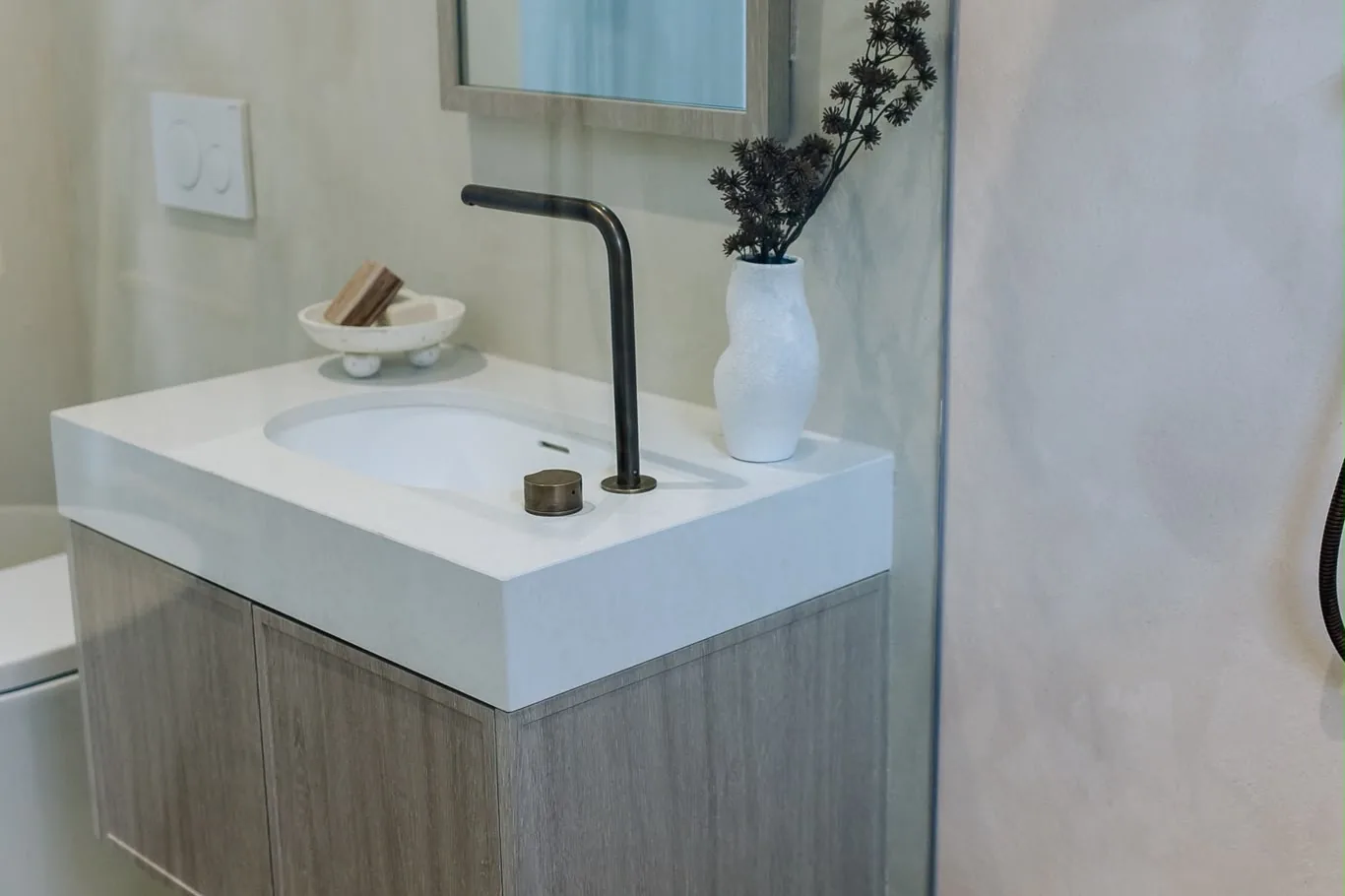
What to avoid
These can damage the sealer and the finish under it:
- bleach and harsh or abrasive cleaners
- acids, including vinegar and some harsh bathroom sprays
- scouring pads and abrasive powders
- dragging heavy furniture across the floor
- hot pans straight onto a benchtop
Spills and stains
The sealer gives you time, but it's best to wipe spills up straight away. Oil, grease, food colouring and paint are the ones to watch.
Floors and furniture
Put felt pads on chair and table legs so they don't scratch the surface. When you move something heavy, lift it or slide it on a soft cloth.
Keeping the sealer in good shape
Over time, a fresh coat of sealer brings the protection back. Floors in busy areas need it sooner than a wall or a vanity.
In our experience, about once a year is enough, if it needs it, and walls and vanities can go longer. We leave you written care instructions and the cleaner to use when the job's done.
If it gets damaged
A damaged spot can be re-trowelled and resealed where it is, without redoing the whole surface. The patch may not match the rest exactly.
Questions
What's the best cleaner for microcement?
The cleaner we leave you when the job's done. If you run out, use warm water and a pH-neutral cleaner, meaning a gentle one that's neither acidic nor alkaline.
Can I use vinegar on microcement?
Skip it. Acids, including vinegar, can damage the sealer and the finish under it.
How often does microcement need resealing?
Not often. In our experience, about once a year is enough, if it needs it, and walls and a vanity can go longer than a busy floor.