Is microcement waterproof? What it means for your shower
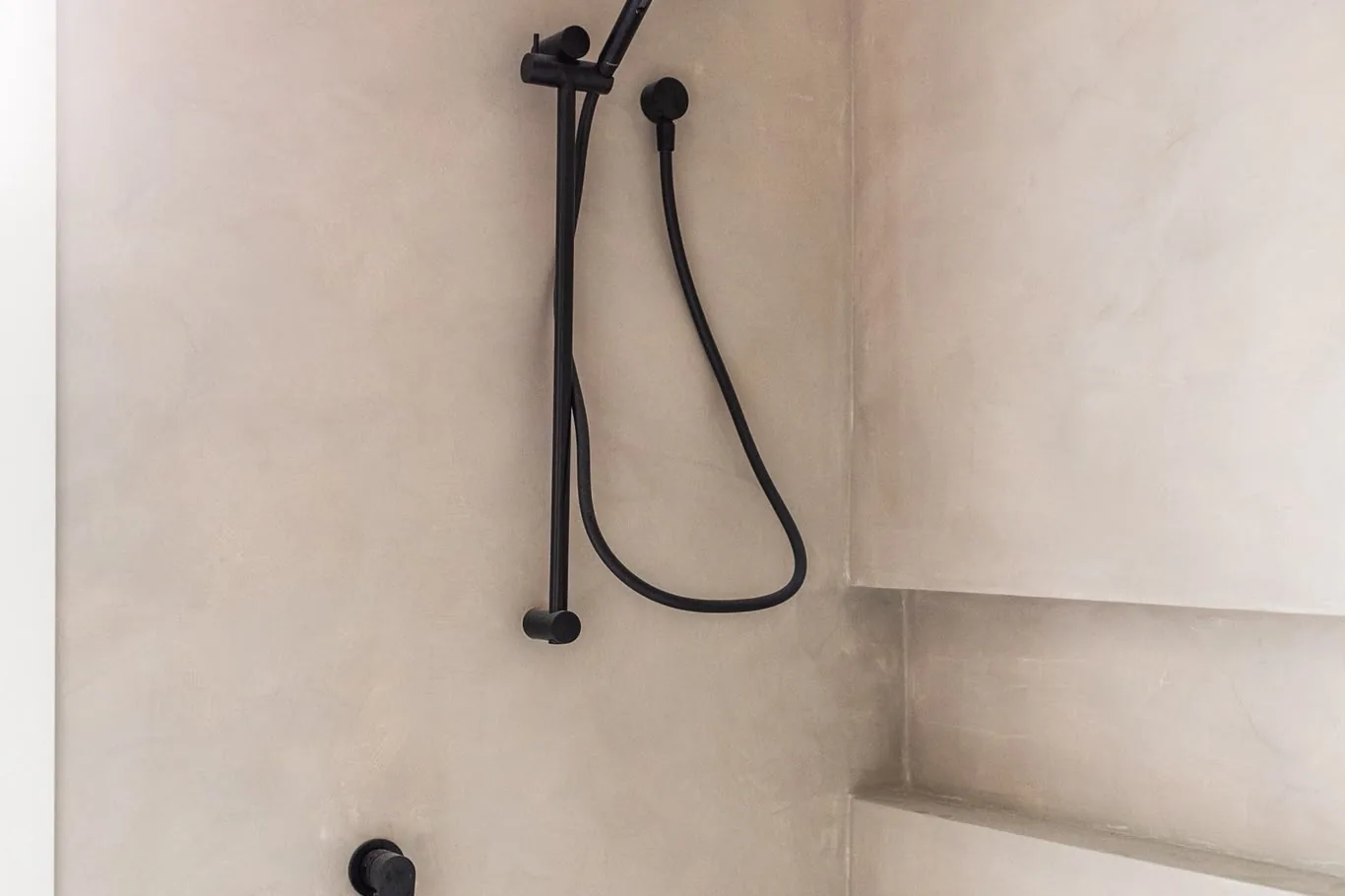
You'll see microcement sold as waterproof. Sealed microcement does shed water, but in a shower it still needs a membrane under it.
It sheds water, but it isn't a membrane
Once it's sealed, microcement sheds water. The sealer on top stops water soaking into the cement, so it's fine to use in a shower.
But microcement is a finish, not a waterproof membrane. The membrane under it is what stops water getting into the walls and floor.
What a membrane is, and why a shower needs one
A membrane is a waterproof layer under the finish of a wet area. In an Australian home it has to meet AS/NZS 4858, the standard for waterproofing membranes, and it's put in following AS 3740, the standard for waterproofing bathrooms and laundries.
That's true whatever the finish on top is, tiles or microcement. The finish keeps most of the water off, and the membrane catches what gets past.
Why going over tiles helps
Many membrane makers say their membrane has to be covered with tiles. If microcement goes straight onto the membrane, it isn't used the way its maker says, and its warranty can be lost.
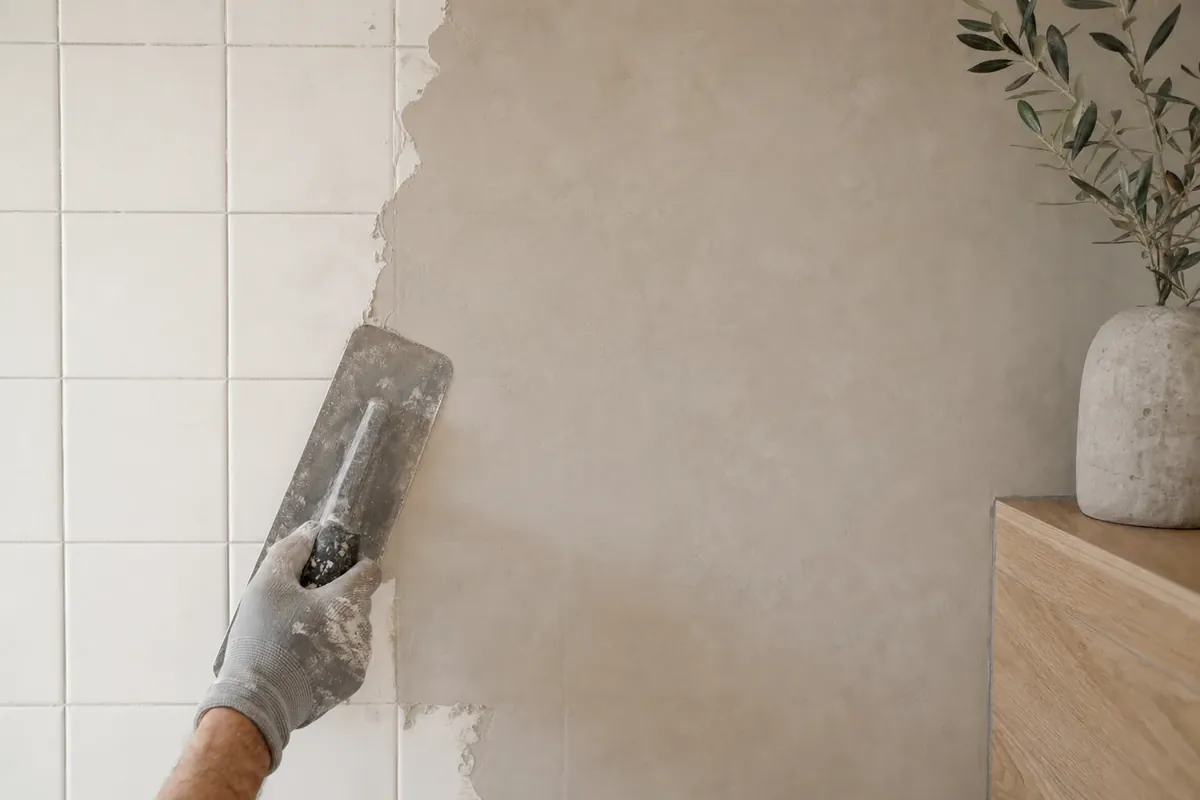
Laying microcement over the existing, well-stuck tiles leaves the membrane as it was put in. Only the surface you see and touch changes.
What we check before a shower gets microcement
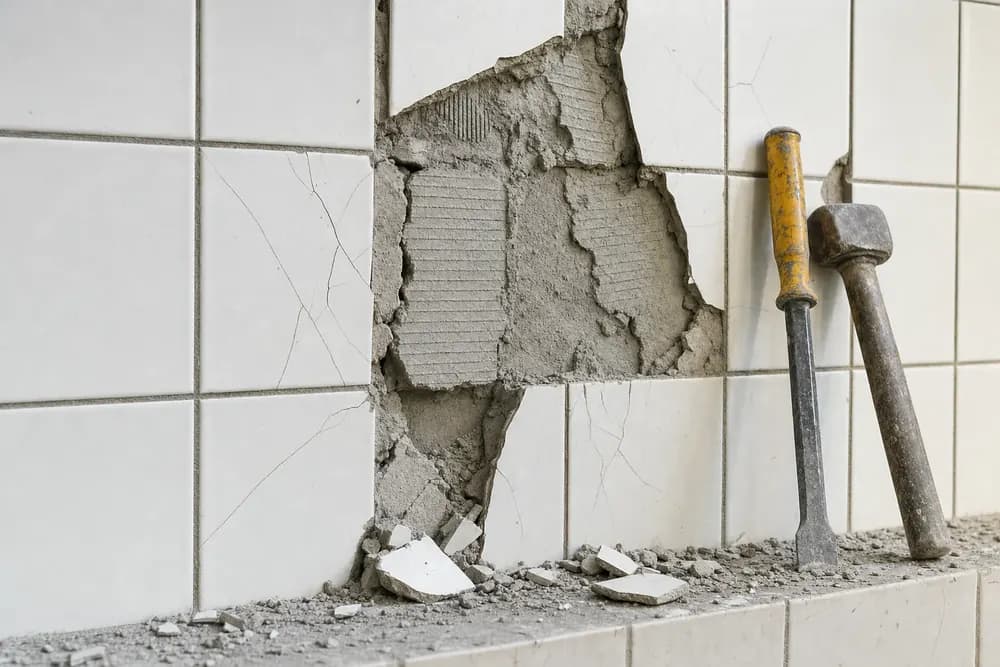
If the shower is being ripped out, it gets a new membrane before anything else goes on. If we're going over the tiles, microcement won't fix a leaking shower, so these come first:
- No leaks, and no water damage like staining, mould or swelling in the walls, floor or cupboards nearby.
- Tiles firmly stuck, with none loose or cracked.
- Grout and silicone intact, with no gaps around the taps or the drain.
Corners and joints
Water usually gets in at the corners, where the wall meets the floor or two walls meet, and around taps. These spots move a little as the house moves.
So in the shower recess we wrap the reinforcing mesh around each corner and tape the joins before the coats go on.
No grout lines for water to track along
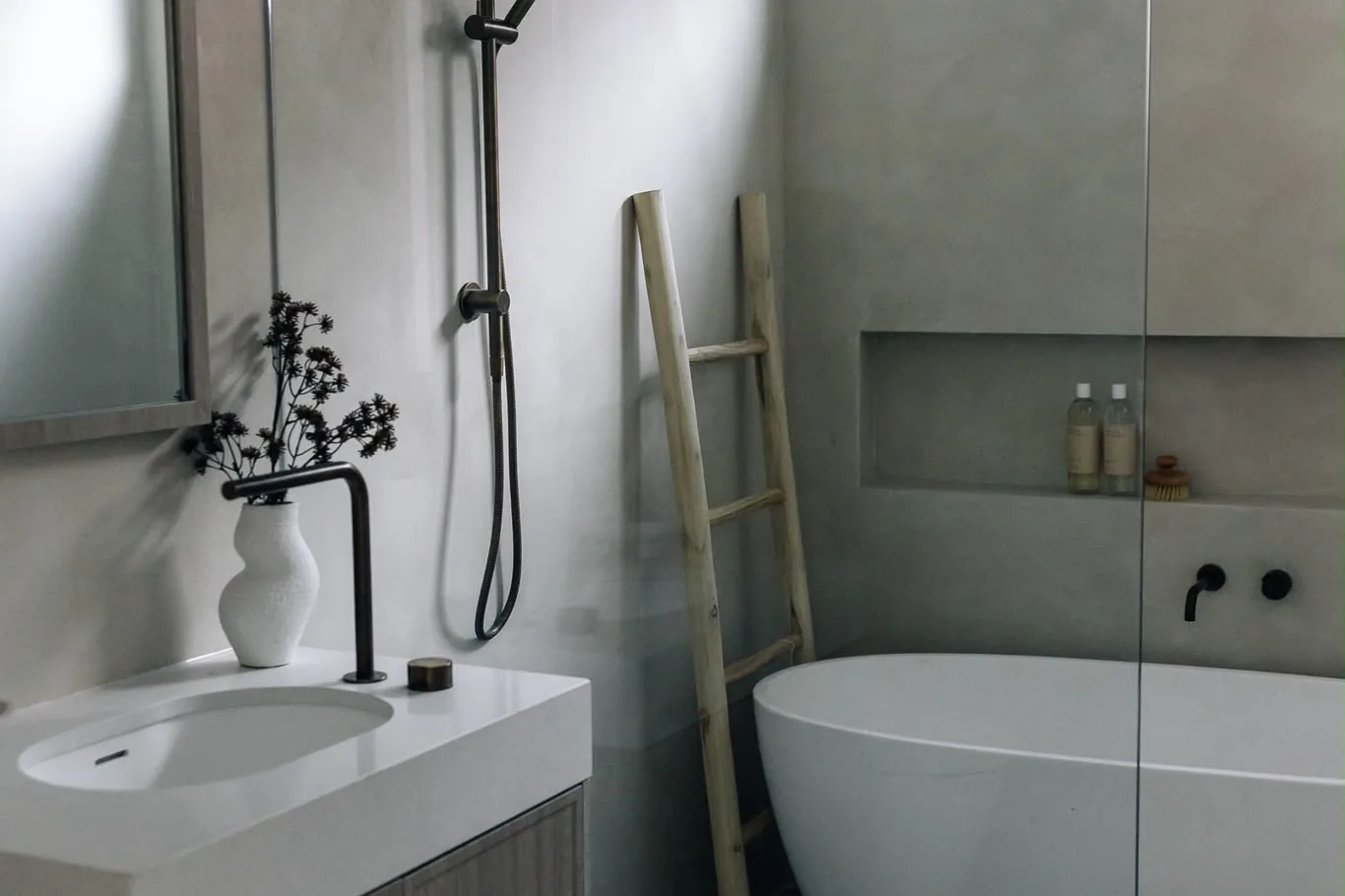
In a tiled shower, the grout lines are where water sits and mould grows. Microcement has no grout lines, so it's one continuous surface that's easier to keep clean.
On the shower floor we get as much fall, meaning slope, towards the drain as the floor allows, and the microcement runs right into the drain.
A smooth sealed floor can be slippery when wet. Shower floors can be finished with a non-slip seal, so ask us about one at the site visit.
Questions
Can microcement go straight onto a waterproof membrane?
Many membrane makers say their membrane has to be covered with tiles, so putting microcement straight onto it can void the membrane's warranty. Laying microcement over well-stuck tiles keeps the membrane as it was put in.
Will microcement stop my shower leaking?
No. Microcement is a finish, so a leaking shower has to be repaired first, then the microcement goes on.
Is a microcement shower floor slippery?
A smooth sealed floor can be slippery when wet. Shower floors can be finished with a non-slip seal.